 Pritam Singh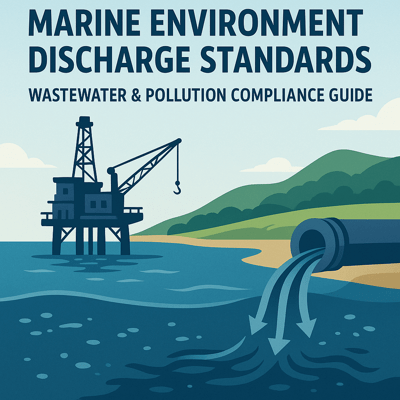
Industrial activities conducted in offshore platforms, coastal refineries, marine terminals, and oil & gas processing facilities generate various liquid and solid wastes. If improperly managed, these discharges can degrade marine ecosystems, harm aquatic life, and contaminate coastal environments.
To prevent marine pollution, strict environmental regulations govern wastewater discharges, sewage disposal, solid waste management, drilling operations, and dredging activities. These requirements ensure that facilities operating in marine environments minimize ecological impact while maintaining regulatory compliance.
This guide outlines the primary discharge standards and monitoring requirements applicable to marine operations.
1. Regulatory Framework for Marine Discharges
Marine discharge regulations are based on international conventions and regional environmental standards. Key regulatory frameworks include:
- Presidency of Meteorology and Environment (PME) Document No. 1409-01
- Regional Organization for the Protection of the Marine Environment (ROPME) Protocol
- Royal Commission Environmental Regulations
- International Maritime Organization (IMO) – MARPOL Annex V
These frameworks establish limits for wastewater quality, waste disposal practices, and environmental monitoring to protect coastal and offshore waters.
Facilities operating within Royal Commission jurisdictions such as Jubail and Yanbu are subject to additional regulatory oversight and stricter environmental performance standards.
2. Marine Discharge Requirements for Existing Facilities
Existing offshore facilities must meet defined limits for sewage and wastewater discharges before releasing effluent into the marine environment.
2.1 Sewage and Wastewater Quality Standards
Marine discharge effluent must comply with PME environmental limits, which typically include:
- pH: 6 – 9
- Total Suspended Solids (TSS): ≤ 15 mg/L
- Biochemical Oxygen Demand (BOD): ≤ 25 mg/L
- Total Coliform: ≤ 1000 MPN / 100 ml
These limits ensure that wastewater discharges do not degrade marine water quality or introduce harmful pathogens.
Additionally, wastewater discharges must:
- Avoid visible floating solids
- Prevent water discoloration
- Minimize oil and grease contamination
2.2 Location-Based Sewage Disposal Requirements
Marine discharge rules vary depending on distance from the shoreline and facility population.
Within 4 Nautical Miles
Facilities with ≥10 personnel:
- Must install and operate an approved Sewage Treatment Plant (STP).
Facilities with <10 personnel:
- Sewage must be comminuted and disinfected prior to discharge.
Beyond 4 Nautical Miles
Facilities with ≥10 personnel:
- Sewage must be comminuted and disinfected before discharge.
Facilities with <10 personnel:
- Only comminution is required.
These requirements reduce biological contamination in coastal waters.
2.3 Grey Water Management
Grey water generated from:
- Accommodation facilities
- Kitchens
- Laundry areas
must be disinfected prior to discharge unless specifically exempted by the Environmental Engineering Division (EED) or Environmental Compliance Division (ECD).
Proper treatment prevents bacterial contamination and nutrient loading in marine waters.
2.4 Cooling Water Discharges
In certain regions such as Yanbu, only untreated once-through cooling water may be discharged into the marine environment.
However, such discharge requires prior approval from environmental authorities and must not introduce harmful chemicals or temperature changes that could affect marine ecosystems.
3. Solid Waste Management Requirements
Marine discharge regulations strictly prohibit dumping of most solid wastes into offshore waters.
3.1 Food Waste
Food waste disposal rules depend on offshore distance:
- Within 12 nautical miles: Discharge prohibited
- Beyond 12 nautical miles: Waste must be comminuted to pass through a 25 mm screen before discharge
3.2 Plastics and Non-Biodegradable Waste
The following materials are strictly prohibited from discharge into the marine environment:
- Plastics
- Paper products
- Glass
- Metal cans
- Packaging materials
- General trash
These materials must be collected and transported to approved onshore disposal facilities.
3.3 Domestic Waste (Offshore Platforms)
Domestic waste generated offshore must be:
- Collected onboard
- Stored safely
- Transported to approved onshore landfill facilities
Direct offshore disposal is not permitted.
3.4 Hazardous Waste
Hazardous materials such as:
- Chemical waste
- Oil sludge
- Contaminated rags
- Paint residues
must never be discharged into the marine environment.
Disposal must follow approved procedures established by environmental authorities.
Industrial Noise Control in Company Facilities: Engineering Requirements and Compliance Strategy
4. Environmental Requirements for New and Modified Facilities
New installations and facility modifications must comply with stricter environmental performance standards.
4.1 Best Practical Technology (BPT)
New facilities must implement Best Practical Technology (BPT) to reduce pollutant discharge.
Examples include:
- Advanced wastewater treatment systems
- Oil-water separation technologies
- Chemical dosing systems
- Filtration and polishing units
These technologies ensure that treated wastewater meets regulatory discharge limits.
4.2 Operations Instruction Manual (OIM)
Facilities must submit an Operations Instruction Manual (OIM) to the Environmental Engineering Division.
The manual must include:
- Treatment system design details
- Operational procedures
- Monitoring plans
- Maintenance requirements
4.3 Compliance Measurement
Environmental compliance must be measured at the final discharge point of the treatment system.
Dilution of wastewater with seawater to meet discharge limits is strictly prohibited.
4.4 Environmental Impact Prevention
Discharges must not cause:
- Bottom scour
- Sediment accumulation
- Turbidity increases
- Harm to marine organisms
Facilities must demonstrate that discharge activities do not negatively affect local marine ecosystems.
5. Drilling Fluid Discharge Regulations
Offshore drilling operations produce drilling fluids and cuttings that must be managed carefully to prevent marine contamination.
5.1 Oil-Based Drilling Fluids
Under ROPME regulations:
- Oil-based drilling fluids are generally prohibited from discharge.
- Any use requires special environmental approval.
Drill cuttings contaminated with oil must undergo cleaning using Best Practical Technology before disposal.
5.2 Alternative Oil-Based Fluids
Alternative fluids may be permitted if they meet toxicity testing requirements, such as LC50 toxicity limits.
These tests evaluate potential environmental impact on marine organisms.
5.3 Water-Based Drilling Fluids
Water-based drilling fluids must be non-toxic.
Cuttings generated from drilling operations must not be discharged into environmentally sensitive areas, including coral reefs or marine reserves.
6. Dredging and Reclamation Activities
Dredging and land reclamation operations may release sediments and contaminants into surrounding waters.
These activities require:
- Environmental approval
- Compliance with marine dredging standards
- Monitoring of turbidity and sediment dispersion
Prior authorization must be obtained before starting dredging or reclamation projects.
7. Monitoring and Compliance Requirements
Continuous monitoring is essential to ensure marine discharge compliance.
Facilities must monitor wastewater parameters according to the following schedule:
Daily Monitoring
- pH
- Residual chlorine
Monthly Monitoring
- Total coliform bacteria levels
All environmental monitoring data must be validated by the Environmental Compliance Division (ECD) using approved laboratory analytical methods.
Offshore facilities operating sewage treatment plants are subject to periodic inspections.
8. Special Environmental Protection Areas
Certain regions require stricter environmental control measures.
Royal Commission Areas
Facilities located in Jubail and Yanbu must comply with stricter discharge limits, including:
- TSS ≤ 25 mg/L (monthly average)
Additional environmental reporting may be required.
Biologically Sensitive Areas
Marine areas containing:
- Coral reefs
- Seagrass beds
- Fish breeding grounds
require case-by-case environmental evaluation by regulatory authorities.
Discharges in these areas may be restricted or prohibited.
9. Marine Waste Handling Infrastructure
Ports and marine terminals must provide slop reception facilities for ships and offshore vessels.
These systems allow vessels to safely offload:
- Oily water mixtures
- Sludge
- Waste oils
Proper infrastructure prevents illegal discharge of ship waste into marine waters.
FAQs: Marine Environment Discharge Standards and Compliance
Marine environment discharge standards are environmental regulations that control the release of wastewater, sewage, drilling fluids, and other wastes into oceans and coastal waters. These standards ensure that industrial discharges do not harm marine ecosystems, aquatic life, or coastal water quality.
Marine pollution control is governed by several international frameworks, including MARPOL (International Convention for the Prevention of Pollution from Ships), ROPME protocols, and regional environmental regulations. These standards establish limits for wastewater discharge, solid waste disposal, and offshore industrial operations.
Yes, offshore platforms may discharge treated sewage into the marine environment if it meets regulatory limits. Typically, sewage must be processed through an approved sewage treatment plant (STP) or disinfected and comminuted before discharge, depending on the facility size and distance from shore.
Monitoring marine discharges ensures that industrial facilities comply with environmental regulations and prevents pollution of marine ecosystems. Regular monitoring helps detect contamination early, protect marine biodiversity, and maintain safe coastal water quality.
Best Practical Technology (BPT) refers to the most effective and feasible technologies used to reduce pollutant discharge into marine environments. Examples include advanced wastewater treatment systems, oil-water separators, filtration units, and chemical treatment processes.
Water-based drilling fluids may be discharged if they are non-toxic and comply with environmental standards. However, oil-based drilling fluids are typically prohibited unless special approval is granted and strict environmental controls are implemented.
Conclusion
Marine discharge management is essential for protecting coastal and offshore ecosystems from industrial pollution. Strict compliance with PME regulations, ROPME protocols, and international maritime standards ensures that wastewater, sewage, drilling fluids, and solid wastes are managed responsibly.
By implementing advanced treatment technologies, maintaining rigorous monitoring programs, and adhering to environmental regulations, industrial facilities can operate sustainably while safeguarding marine environments.
Responsible environmental management not only ensures regulatory compliance but also protects valuable marine resources for future generations.