 Pritam Singh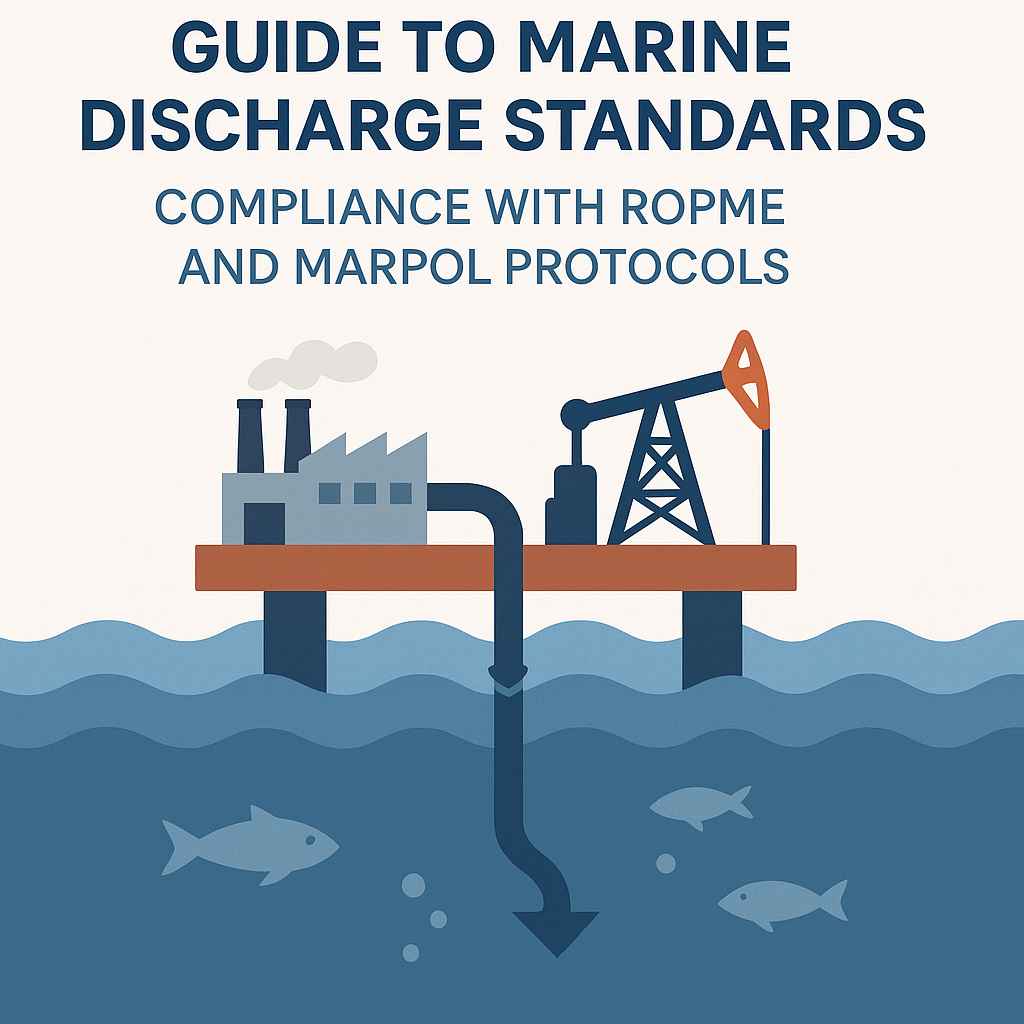
Managing discharges into the marine environment is essential for protecting coastal ecosystems, maintaining water quality, and ensuring compliance with international environmental regulations. Industrial facilities operating near coastlines or offshore must follow strict guidelines to control the release of wastewater, treated sewage, cooling water, and other effluents.
This guide outlines the minimum requirements for direct discharges into marine environments from both onshore and offshore facilities. It explains regulatory applicability, operational requirements, monitoring procedures, and effluent limitations. The guidelines are aligned with internationally recognized environmental frameworks such as the Regional Organization for the Protection of the Marine Environment (ROPME) and the International Maritime Organization’s MARPOL 73/78 Convention.
Applicability of Marine Discharge Standards
Marine discharge regulations apply to facilities that release treated or processed liquids directly into coastal or offshore waters. These standards cover a wide range of discharge sources commonly found in industrial and offshore operations.
The regulations typically apply to the following discharge types:
- Treated sanitary wastewater
- Industrial process wastewater
- Cooling water discharges
- Brine disposal from desalination systems
- Offshore drilling fluids and cuttings
- Other operational discharges into marine environments
These requirements apply to existing facilities, new installations, and modified operations that may introduce pollutants into marine ecosystems.
Exclusions
Marine vessels are not regulated under this particular standard. Instead, ship-related discharges are governed by separate international regulations, including:
- ROPME Protocols
- MARPOL 73/78 – International Convention for the Prevention of Pollution from Ships
These international agreements regulate waste disposal, ballast water discharge, and garbage management for marine vessels worldwide.
Core Requirements for Marine Discharges
The primary objective of marine discharge regulations is to minimize environmental pollution while allowing necessary industrial operations. Facilities must implement engineering, operational, and monitoring measures to ensure that discharges do not harm marine ecosystems.
Design and Operational Requirements
Facilities that discharge wastewater into marine environments must incorporate appropriate environmental protection measures during both the design and operational phases.
Wastewater Treatment Systems
New or modified facilities must install effective wastewater treatment systems designed to reduce pollutant concentrations before discharge.
Treatment systems may include:
- Biological treatment processes
- Oil-water separation systems
- Filtration units
- Chemical treatment systems
- Disinfection units
These technologies help remove contaminants such as suspended solids, organic matter, oil, and harmful bacteria.
Sewage and Sanitary Wastewater Management
Proper management of sanitary wastewater is critical in both offshore platforms and coastal industrial facilities.
Key requirements include:
- Facilities located near shorelines with larger personnel populations must install advanced sewage treatment plants (STPs).
- Smaller offshore installations with limited personnel may use comminution systems without disinfection, depending on regulatory requirements.
- Sewage discharge must not produce visible floating materials or cause water discoloration.
These measures help protect marine ecosystems from biological contamination.
Solid Waste Disposal Restrictions
Strict regulations apply to the disposal of solid waste in marine environments.
Key requirements include:
- Food waste discharge within 12 nautical miles of land is prohibited.
- Beyond 12 nautical miles, food waste may be discharged only after comminution through a 25 mm screen.
- Disposal of plastics, paper products, packaging materials, and general trash into the sea is strictly prohibited.
These rules are consistent with international marine pollution prevention protocols.
Offshore Drilling Operations
Drilling activities can introduce contaminants into marine environments if not properly controlled.
Regulations governing drilling operations include:
- Oil-based drilling fluids are generally prohibited under the ROPME protocol due to their environmental impact.
- Water-based drilling fluids must be non-toxic and environmentally acceptable.
- Drill cuttings must undergo toxicity testing before discharge into marine waters.
These restrictions are designed to protect marine habitats and prevent contamination of surrounding ecosystems.
Other Operational Discharges
Certain operational activities may also result in marine discharges. Examples include:
- Hydrostatic testing of pipelines
- Desalination plant brine disposal
- Dredging activities
- Equipment cleaning or flushing operations
Such activities must comply with strict environmental controls to prevent marine contamination.
Monitoring and Verification of Marine Discharges
Continuous monitoring is essential to ensure that discharged effluents meet environmental quality standards.
Facilities must implement monitoring programs to verify that effluent parameters remain within approved limits.
Monitoring Parameters
Common parameters that must be monitored include:
- Residual chlorine
- pH levels
- Total coliform bacteria
These measurements are typically taken at the final discharge point, where treated wastewater enters the marine environment.
Recordkeeping Requirements
Facilities must maintain detailed environmental monitoring records, including:
- Sampling results
- Analytical laboratory reports
- Operational logs
- Maintenance and inspection records
These records must be available for review by environmental regulatory authorities.
Exemptions from Monitoring
Some discharge activities may qualify for limited monitoring requirements.
For example, comminuted-only food waste discharges may not require detailed laboratory analysis but must still undergo visual inspection to ensure that no floating materials or discoloration occur.
Approved Analytical Methods
Environmental testing must follow internationally recognized laboratory standards.
Common analytical standards include:
- APHA (American Public Health Association) methods
- ASTM (American Society for Testing and Materials) procedures
Testing must be conducted by accredited laboratories to ensure reliable results.
Effluent Discharge Limitations
Effluent discharge standards are established to protect marine ecosystems and maintain water quality.
Typical environmental limits include:
| Parameter | Maximum Limit | Purpose |
|---|---|---|
| Floatables | None allowed | Prevent visible pollution |
| pH | 6 – 9 | Maintain chemical balance |
| Total Suspended Solids (TSS) | 15 mg/L | Prevent sediment accumulation |
| Turbidity | 75 NTU | Protect water clarity |
| BOD (Biochemical Oxygen Demand) | 25 mg/L | Prevent oxygen depletion |
| COD (Chemical Oxygen Demand) | 150 mg/L | Control organic contamination |
| Oil and Grease | 8 mg/L | Prevent surface films |
| Ammonia (as N) | 1 mg/L | Reduce toxicity to marine life |
| Residual Chlorine | 0.5 mg/L | Limit chemical impact |
| Mercury | 0.001 mg/L | Prevent heavy metal contamination |
| Total Coliform | 1000 MPN/100 mL | Maintain sanitary safety |
These limits are aligned with ROPME and MARPOL environmental protection requirements.
Recommended Analytical Methods
Environmental monitoring typically uses standardized laboratory methods for accurate measurement.
| Parameter | APHA Method | ASTM Method |
|---|---|---|
| pH | — | ASTM D1293 |
| Turbidity | APHA 2130-B | — |
| BOD | APHA 5210-B | — |
| Oil and Grease | APHA 5520-C | — |
| Ammonia | — | ASTM D1426 |
| Chlorine | APHA 4500-Cl | — |
| Total Coliform | APHA 9221-B | — |
Using standardized methods ensures reliable environmental compliance monitoring.
Compliance and Regulatory Oversight
Environmental authorities enforce marine discharge regulations through inspections, monitoring programs, and reporting requirements.
Conflict Resolution
If multiple environmental regulations apply, the most stringent requirement must be followed to ensure maximum environmental protection.
Deviation Requests
Any request to deviate from established discharge limits must be formally submitted to regulatory authorities for approval.
Facilities cannot modify discharge procedures without official authorization.
Discharges in Sensitive Marine Areas
Additional environmental assessments may be required when discharges occur near:
- Coral reefs
- Marine reserves
- Fish breeding grounds
- Environmentally sensitive coastal habitats
These areas require stricter environmental protection measures.
FAQs: Marine Environment Discharge Standards
Marine environment discharge standards are environmental regulations that control the release of wastewater, sewage, cooling water, and industrial effluents into oceans and coastal waters. These standards are designed to protect marine ecosystems, prevent pollution, and ensure sustainable offshore and coastal operations.
Marine pollution from industrial facilities is regulated through international agreements such as MARPOL 73/78, the ROPME Protocol, and regional environmental protection regulations. These frameworks establish discharge limits and environmental protection measures for offshore platforms, refineries, and coastal industrial plants.
Most international marine discharge standards require the pH of discharged effluent to remain between 6 and 9. This range helps maintain chemical balance in seawater and prevents harmful impacts on marine organisms.
Monitoring marine discharges ensures that wastewater meets environmental quality limits before entering coastal waters. Regular monitoring helps prevent pollution, protect marine biodiversity, and maintain compliance with international environmental regulations.
Water-based drilling fluids may be discharged if they are non-toxic and meet environmental requirements. However, oil-based drilling fluids are generally prohibited under regional marine protection agreements unless special approval is granted.
If a facility exceeds environmental discharge limits, regulatory authorities may require corrective actions, operational modifications, or temporary shutdown of the discharge system until compliance is restored. Penalties and environmental reporting may also be imposed.
Conclusion
Marine discharge regulations play a vital role in protecting coastal and offshore ecosystems from industrial pollution. By complying with internationally recognized standards such as ROPME protocols and MARPOL conventions, facilities can ensure that wastewater discharges remain within safe environmental limits.
Implementing effective wastewater treatment systems, maintaining strict monitoring programs, and following established discharge guidelines allows industries to operate responsibly while preserving fragile marine ecosystems for future generations.
👉 Learn more about sustainable compliance strategies in our Marine Environmental Standards Guide.