 Pritam Singh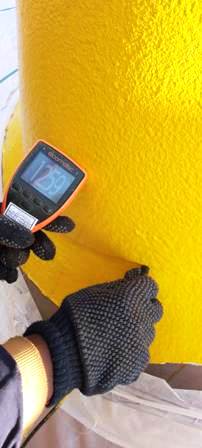

A glass flake reinforced epoxy coating system is a high-performance protective coating specifically engineered for extreme corrosion environments. It consists of an epoxy resin matrix reinforced with microscopic, platelet-shaped glass flakes that dramatically enhance barrier performance, chemical resistance, and durability.
This system is widely used in marine, offshore, oil & gas, power generation, chemical processing, and wastewater infrastructure where long-term corrosion protection is critical.
Unlike conventional epoxy coatings, glass flake epoxy creates a multi-layered shield that significantly reduces permeability and extends asset service life.
1. What Is Glass Flake Reinforced Epoxy?
Glass flake reinforced epoxy is a thick-film protective coating that incorporates thin, flat glass flakes into an epoxy resin base.
The glass flakes typically measure:
- 100–300 microns in diameter
- Very thin platelet geometry
- Chemically inert composition
When dispersed properly within the epoxy resin, these flakes create a laminated barrier structure inside the coating film.
This reinforcement transforms a standard epoxy coating into a highly impermeable corrosion-resistant system.
2. How Does Glass Flake Epoxy Work?
The performance advantage of glass flake coatings lies in their unique internal structure.
2.1 The Tortuous Path Effect
During application, the flat glass flakes naturally align parallel to the substrate surface. This orientation forms multiple overlapping layers throughout the coating thickness.
Corrosive agents such as:
- Water
- Oxygen
- Chlorides
- Sulfates
- Acidic vapors
must travel around each flake to penetrate the coating.
Instead of moving directly through the film, they encounter a complex “tortuous path,” significantly increasing diffusion distance and slowing corrosion.
This results in:
- Extremely low permeability
- Reduced under-film corrosion
- Improved chemical resistance
- Extended service life
3. Why Glass Flake Reinforced Epoxy Is Used in Oil & Gas
Oil & gas environments are among the most aggressive operating conditions in industry.
Assets face:
- Salt-laden marine exposure
- High humidity
- Sour gas (H₂S)
- Chemical processing vapors
- Elevated temperatures
- Abrasive flow conditions
Standard epoxy coatings may perform adequately in moderate service, but in immersion or splash-zone environments, additional barrier protection is required.
Glass flake epoxy systems are commonly selected for:
- Offshore platforms
- Tank internals
- Secondary containment areas
- Seawater systems
- Produced water treatment units
- Desalination plants
Because of their superior barrier properties, they are often specified where long maintenance intervals are required.
4. Key Benefits of Glass Flake Reinforced Epoxy Coatings
4.1 Superior Corrosion Resistance
The multi-layered flake structure drastically reduces water and oxygen permeability. This minimizes the electrochemical reactions responsible for corrosion.
In marine exposure, this makes glass flake coatings highly effective for long-term asset protection.
4.2 High Film Thickness Capability
Glass flake systems are typically applied at:
500–1500 microns (0.5–1.5 mm)
This thick-film application provides:
- Enhanced mechanical protection
- Reduced risk of breakthrough corrosion
- Improved impact resistance
4.3 Chemical Resistance
Glass flake epoxy coatings demonstrate strong resistance to:
- Acids
- Alkalis
- Hydrocarbons
- Seawater
- Wastewater
- Industrial chemicals
This makes them suitable for chemical plants and processing facilities.
4.4 Abrasion and Mechanical Resistance
Because of the reinforced structure, these coatings offer better abrasion resistance compared to conventional epoxy coatings.
This is beneficial in:
- Slurry tanks
- Pipelines
- Flowlines
- Areas exposed to mechanical impact
4.5 Extended Service Life
Glass flake systems are often designed for:
10–20 years of service life
When properly applied and inspected, they reduce:
- Maintenance frequency
- Shutdown costs
- Repair intervals
While initial costs may be higher, lifecycle cost is often lower.
5. Common Applications of Glass Flake Epoxy
5.1 Marine and Offshore Structures
Used on:
- Splash zones
- J-tubes
- Risers
- Platform legs
- Ship hulls
The system withstands constant saltwater exposure and wave action.
5.2 Oil & Gas Facilities
Applied to:
- Storage tank externals and internals
- Process vessels
- Pipeline systems
- Produced water treatment units
- Separator vessels
Glass flake linings are often selected for immersion service.
5.3 Chemical Processing Plants
Used in:
- Chemical containment areas
- Reactor vessels
- Effluent systems
- Corrosive vapor exposure zones
5.4 Infrastructure and Water Treatment
Commonly applied in:
- Bridges
- Wastewater tanks
- Water treatment basins
- Cooling towers
Its chemical and moisture resistance make it ideal for these environments.
6. Application Process for Glass Flake Reinforced Epoxy
Because of its high-build nature, proper application is critical.
6.1 Surface Preparation
Surface preparation typically requires:
- Abrasive blasting to Sa 2.5 / SSPC-SP 10
- Surface profile typically 50–100 microns
- Removal of dust and salts
- Environmental compliance (dew point control)
Poor surface preparation is the most common cause of failure.
6.2 Primer Application
Some systems require an epoxy primer to enhance adhesion and seal the substrate before glass flake application.
6.3 Coating Application
Application methods include:
- Airless spray
- Trowel application (for thick linings)
- Brush or roller (for small areas)
Multiple coats may be required to achieve specified DFT.
6.4 Film Thickness Control
Due to high build, careful monitoring of:
- Wet film thickness
- Dry film thickness
is required.
DFT is typically verified using calibrated electronic gauges.
6.5 Curing and Inspection
Curing time depends on:
- Ambient temperature
- Relative humidity
- Coating formulation
Post-application inspection includes:
- DFT measurement
- Holiday testing (for immersion service)
- Visual inspection for defects
- Adhesion testing if specified
7. Inspection and Quality Control
For coating inspectors, key checks include:
- Surface cleanliness
- Profile measurement
- Environmental monitoring
- DFT compliance
- Holiday testing voltage selection
- Repair inspection
Because glass flake systems are thick, missed holidays can result in severe localized corrosion.
Holiday testing is often mandatory for tank linings.
8. Comparison with Standard Epoxy and Zinc-Rich Systems
| Property | Standard Epoxy | Zinc-Rich Coating | Glass Flake Epoxy |
|---|---|---|---|
| Barrier Protection | Moderate | Low (sacrificial) | Very High |
| Film Thickness | 150–300 µm | 60–100 µm | 500–1500 µm |
| Corrosion Mechanism | Barrier | Cathodic Protection | Advanced Barrier |
| Service Life | Moderate | Moderate | Long |
| Cost | Moderate | Moderate | Higher |
Glass flake epoxy provides non-sacrificial barrier protection with superior impermeability.
9. Considerations Before Selecting Glass Flake Epoxy
9.1 Higher Initial Cost
Material and application costs are higher than conventional systems.
However, lifecycle cost is often lower.
9.2 Skilled Applicators Required
Due to thickness and viscosity:
- Proper spray technique is required
- Experienced applicators are preferred
- Improper application may cause sagging or uneven film
9.3 Inspection Requirements
Because these coatings are used in critical service, inspection must be thorough.
DFT verification and holiday testing are essential.
10. Why Glass Flake Reinforced Epoxy Is a Strategic Choice
For industries where corrosion risk is high and maintenance shutdowns are costly, glass flake epoxy provides:
- Long-term corrosion resistance
- Reduced permeability
- Improved mechanical durability
- High-build protective barrier
- Extended inspection intervals
It is particularly valuable in splash zones, immersion service, and aggressive chemical environments.
Frequently Asked Questions (FAQ) – Glass Flake Reinforced Epoxy Coating System
A glass flake reinforced epoxy coating system is a high-performance protective coating that contains thin glass flakes dispersed within an epoxy resin matrix. These glass flakes create a layered barrier structure that improves chemical resistance, reduces permeability, and enhances durability in aggressive environments.
The glass flakes align parallel to the substrate during application, forming overlapping layers. This creates a “tortuous path” that slows down the penetration of water, chemicals, and corrosive agents, significantly improving corrosion resistance and service life.
Glass flake reinforced systems are commonly used in:
1. Offshore platforms
2. Storage tanks
3. Chemical processing plants
4. Wastewater treatment facilities
5. Marine structures
6. Pipeline external protection
They are especially suitable for immersion and splash zone environments.
Glass flake epoxy systems are usually applied at higher thicknesses than standard epoxy coatings. Typical DFT ranges from 500 to 2000 microns depending on the service environment and specification.
Yes. Proper surface preparation is critical. Abrasive blasting to the specified cleanliness level and anchor profile ensures proper adhesion and long-term performance. Poor surface preparation can lead to delamination or premature failure.
Conclusion
Glass flake reinforced epoxy coating systems represent a significant advancement in corrosion protection technology. By embedding microscopic glass flakes within an epoxy matrix, these coatings create a dense, layered barrier that dramatically reduces permeability and enhances durability.
For marine, oil & gas, and heavy industrial applications, glass flake epoxy coatings offer superior long-term performance compared to conventional systems. Although they require skilled application and careful inspection, their extended service life and robust protection make them a cost-effective solution for critical infrastructure.
When properly applied and inspected, glass flake reinforced epoxy coatings provide reliable protection in some of the harshest operating environments.