 By Admin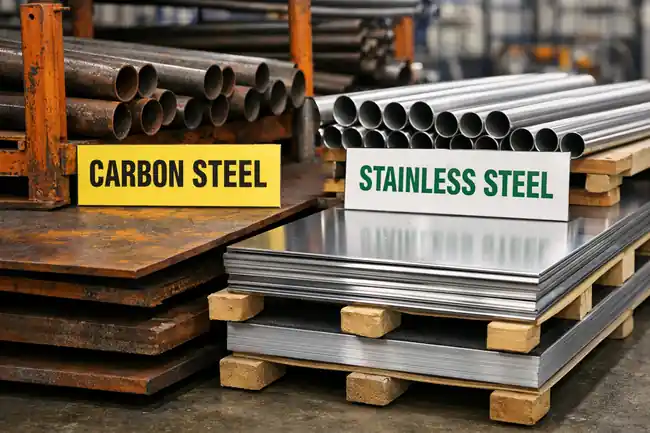
In industrial projects—especially in oil and gas, petrochemical plants, and offshore construction—material handling is not just a storage activity. It is a critical quality control requirement. One of the most important rules in fabrication yards and construction sites is keeping stainless steel (SS) separate from carbon steel (CS).
Although both are widely used structural materials, they behave very differently when exposed to contamination. Improper segregation can lead to corrosion, rejection, and even service failure.
This article explains why stainless steel must always be stored and handled separately from carbon steel.
Understanding the Basic Difference Between SS and CS
Carbon steel is primarily made of iron and carbon. It is strong and economical but prone to rust when exposed to moisture and oxygen.
Stainless steel, on the other hand, contains a minimum of 10.5% chromium. Chromium forms a thin, invisible protective film on the surface called a passive oxide layer. This layer protects the material from corrosion.
The problem begins when carbon steel particles come into contact with stainless steel.
The Main Reason: Iron Contamination
The most critical reason for segregation is iron contamination, also called cross-contamination.
During fabrication activities such as grinding, cutting, or welding carbon steel, tiny iron particles are released into the environment. These particles can:
- Settle on stainless steel surfaces
- Embed into the surface during handling
- Transfer through shared tools and equipment
Once embedded, these carbon steel particles begin to rust. Even though stainless steel itself is corrosion-resistant, the transferred iron particles will oxidize, causing visible rust spots.
This leads to:
- Surface staining
- Pitting corrosion
- Crevice corrosion
- Premature material failure
Damage to the Passive Layer
Stainless steel depends on its chromium-rich passive layer for protection. When contaminated with iron:
- The passive layer becomes locally damaged
- Corrosion initiates at specific points
- Localized attack spreads over time
In aggressive environments such as offshore platforms or chemical plants, this damage accelerates rapidly.
Why It Is Critical in the Oil and Gas Industry
In the Oil and Gas Industry, stainless steel is often used in:
- Process piping
- Heat exchangers
- Storage tanks
- Offshore structures
Contamination in such systems can result in:
- Product contamination
- Reduced corrosion resistance
- Leaks or structural weakness
- Inspection rejection
- Costly rework
Even minor surface rust can result in non-conformance reports (NCRs) during client inspections.
Fabrication and Workshop Risks
Cross-contamination commonly occurs when:
- The same grinding wheels are used for CS and SS
- Shared wire brushes are used
- Work tables are not cleaned properly
- Stainless steel is stored directly on carbon steel racks
- Grinding sparks fall onto stainless steel materials
That is why professional workshops maintain:
- Dedicated stainless steel fabrication areas
- Separate tool sets for SS
- SS-only wire brushes and abrasives
- Clearly labeled storage zones
Storage Best Practices
Proper storage procedures include:
- Storing SS on wooden pallets or rubber-lined supports
- Keeping it away from carbon steel racks
- Covering materials to protect from dust and sparks
- Using plastic wrapping where required
- Avoiding contact with rusted surfaces
Segregation should be clearly marked and controlled under site quality procedures.
Industry Standards and Quality Requirements
Several international standards emphasize contamination control and proper material handling, including:
- ASTM International
- American Petroleum Institute
- NACE International
Project specifications often clearly state that stainless steel must not come into contact with carbon steel at any stage of storage, fabrication, or installation.
Failure to comply may result in material rejection and project delays.
Consequences of Poor Segregation
If stainless steel is not properly separated, the project may face:
- Increased corrosion risk
- Surface rust complaints
- Re-polishing and passivation costs
- Client rejection during inspection
- Long-term performance issues
In high-value projects, even cosmetic rust can damage company reputation.
Conclusion
Stainless steel and carbon steel may look similar, but their corrosion behavior is completely different. Keeping stainless steel separate from carbon steel is not just a good practice—it is a strict quality requirement.
Segregation prevents iron contamination, protects the passive layer, and ensures long-term durability of stainless steel components. In industries where safety and reliability are critical, proper material handling is as important as correct installation.
For QA/QC professionals, inspectors, and fabrication teams, maintaining clear separation between SS and CS is essential for delivering a compliant and corrosion-resistant project.
FAQ
Stainless steel must be stored separately to prevent iron contamination from carbon steel. When carbon steel particles transfer onto stainless steel surfaces, they can rust and cause localized corrosion, even though stainless steel itself is corrosion-resistant.
Cross-contamination occurs when carbon steel particles—such as grinding dust or metal filings—come into contact with stainless steel. These particles embed into the surface and later oxidize, leading to rust spots and potential corrosion damage.
Yes. While stainless steel resists corrosion due to its chromium content, contact with carbon steel can transfer iron particles. These particles rust and create surface staining or pitting corrosion on stainless steel.
Iron contamination can be removed by proper cleaning methods such as mechanical polishing, chemical cleaning, or passivation treatments using approved solutions. After cleaning, the surface should be thoroughly rinsed and inspected to ensure contamination is eliminated.
Best practices include:
Using separate storage areas
Keeping dedicated tools for stainless steel
Avoiding shared grinding discs or wire brushes
Storing SS on wooden or rubber-lined pallets
Protecting SS materials from grinding sparks
Proper segregation and inspection procedures help ensure long-term corrosion resistance and compliance with project quality standards.