 By Admin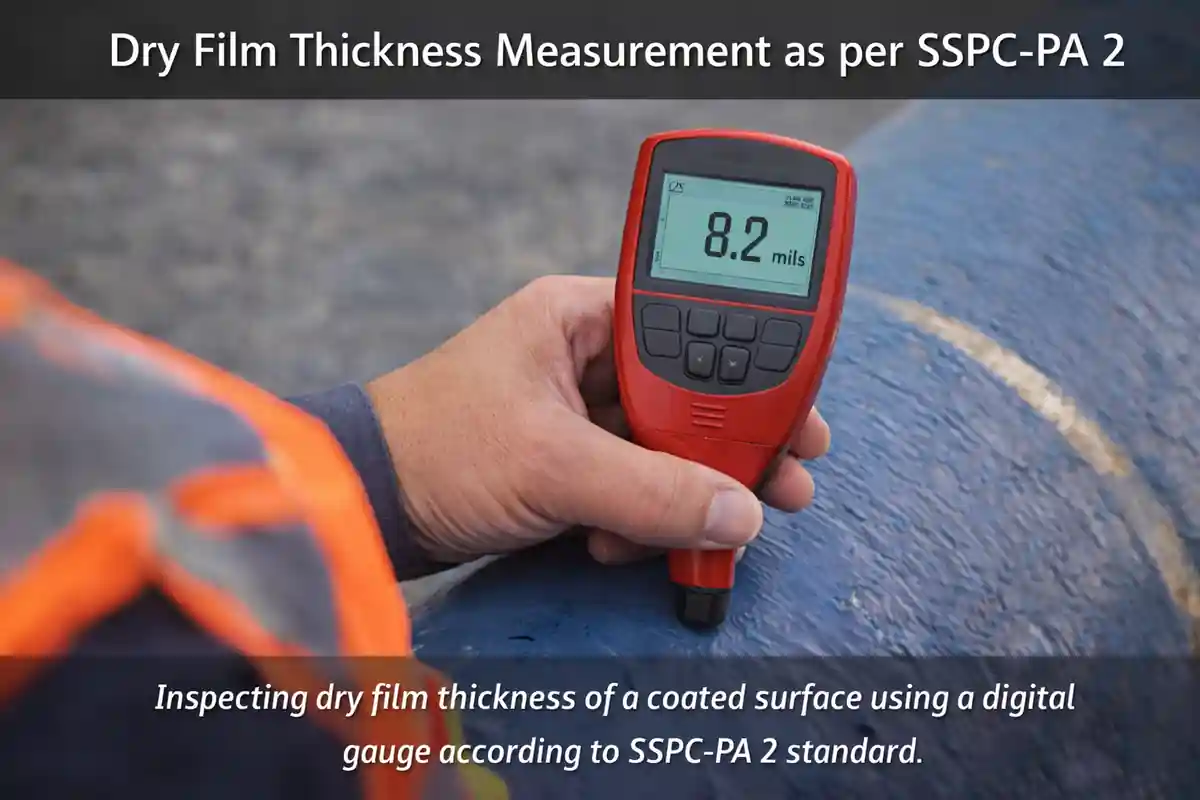
Dry Film Thickness (DFT) measurement is one of the most critical quality control activities in protective coating inspection. Incorrect thickness can result in premature coating failure, reduced corrosion protection, or unnecessary material cost.
The most widely used field standard for DFT measurement is SSPC-PA 2, titled Procedure for Determining Conformance to Dry Coating Thickness Requirements.
This guide explains SSPC-PA 2 in simple, practical terms for coating inspectors, QA/QC engineers, and project managers.
What Is SSPC-PA 2?
SSPC-PA 2 provides standardized procedures for measuring dry film thickness of coatings applied to metallic substrates using magnetic or electronic gauges.
It ensures:
- Uniform inspection method
- Reliable thickness verification
- Fair acceptance criteria
- Consistent reporting
SSPC standards are now maintained by AMPP (formerly SSPC/NACE).
Why DFT Measurement Is Important
Correct DFT ensures:
✔ Proper corrosion protection
✔ Manufacturer warranty compliance
✔ Contract specification compliance
✔ Long-term coating durability
✔ Avoidance of over-thickness cracking
In Oil & Gas projects, DFT measurement directly impacts asset integrity.
Instruments Used in SSPC-PA 2
DFT is typically measured using:
- Magnetic pull-off gauges (Type 1)
- Electronic gauges (Type 2)
Electronic gauges are more common today due to accuracy and digital recording.
SSPC-PA 2 Measurement Procedure (Step-by-Step)
Step 1: Gauge Calibration & Verification
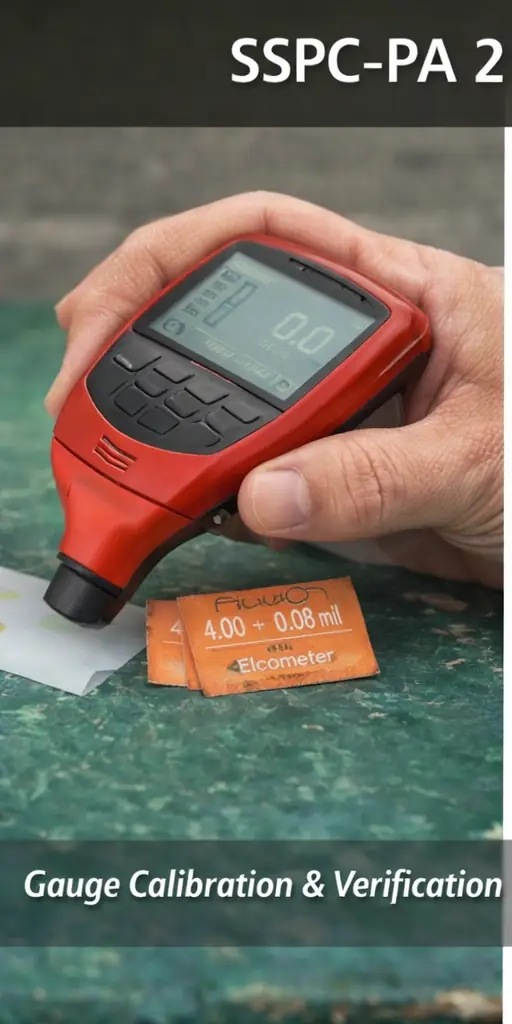
Before measurement:
- Calibrate gauge as per manufacturer instructions
- Verify accuracy using certified shims
- Check zero on uncoated surface
This ensures reliable readings.
Step 2: Define Inspection Area
An inspection area is typically:
- 100 square feet (or smaller area if specified)
Each inspection area is evaluated separately.
Step 3: Spot Measurements
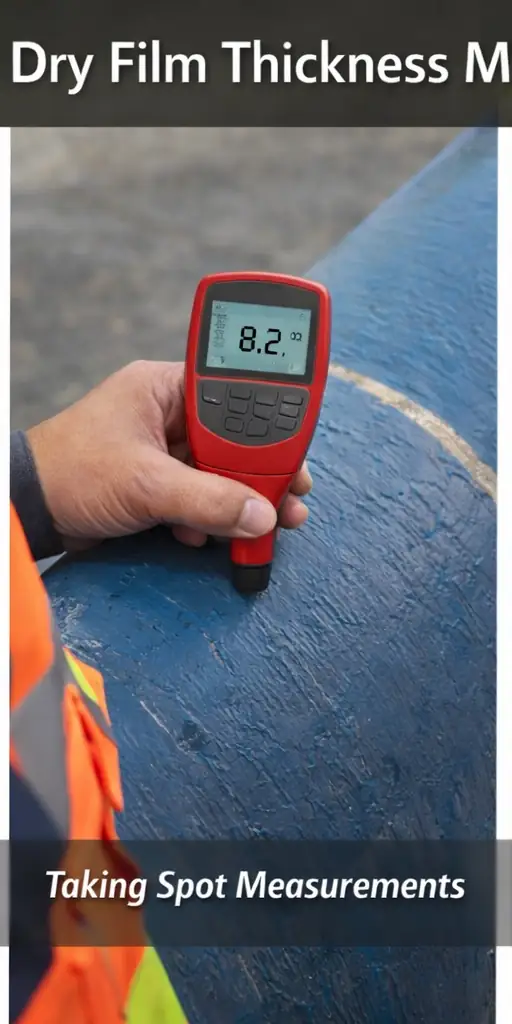
Within each inspection area:
- Take 5 spot measurements randomly
- Each spot consists of at least 3 gauge readings within a 1.5-inch diameter circle
- Average the 3 readings to get 1 spot value
This ensures statistical reliability.
Step 4: Acceptance Criteria
SSPC-PA 2 uses a three-level acceptance approach:
1️⃣ Individual Gauge Reading
No single reading should be below 80% of minimum specified thickness.
2️⃣ Spot Measurement
The average of readings at each spot must meet minimum thickness requirements.
3️⃣ Area Average
The average of all 5 spots must fall within the specified DFT range.
This prevents localized thin or thick areas.
Example (Practical Field Case)
Specified DFT: 250–350 microns
In one inspection area:
- 5 spots measured
- Each spot has 3 readings
- Spot averages calculated
- Area average calculated
If all criteria are satisfied → Area accepted.
If not → Corrective action required.
Frequency of Measurement
Measurement frequency depends on:
- Project specification
- Owner requirement
- Criticality of structure
- Coating type
More critical assets require more frequent inspection.
Common Mistakes in DFT Measurement
❌ Not calibrating gauge properly
❌ Taking readings too close to edges
❌ Ignoring surface profile effect
❌ Measuring over weld spatter
❌ Not following 5-spot rule
These mistakes can cause rejection during audits.
Surface Profile Consideration
Surface profile affects DFT readings.
If profile is high, readings may appear higher than actual coating thickness. Always verify surface preparation standard before coating application.
Reporting Requirements

A proper DFT report should include:
- Project name
- Location
- Coating system
- Specified thickness range
- Gauge type and serial number
- Calibration details
- Individual readings
- Spot averages
- Area averages
- Inspector signature
Clear documentation protects both contractor and client.
When Is SSPC-PA 2 Not Applicable?
SSPC-PA 2 applies to metallic substrates.
For:
- Concrete substrates
- Destructive testing
- Non-magnetic substrates
Other standards may apply.
Relationship with ASTM Standards
While SSPC-PA 2 defines the acceptance procedure, thickness measurement instruments are often governed by ASTM standards such as:
- ASTM D1186
- ASTM D1400
These define how gauges operate, while PA 2 defines acceptance criteria.
Why SSPC-PA 2 Is Critical in Oil & Gas Projects
In refineries, offshore platforms, and pipelines:
- Under-thickness → corrosion risk
- Over-thickness → cracking and solvent entrapment
- Non-uniform thickness → early failure
Following SSPC-PA 2 ensures compliance and reduces dispute risk.
FAQ Section
Five spot measurements per 100 square feet, with three gauge readings per spot.
Yes. If a reading is below 80% of minimum specified thickness, it may result in rejection.
No. It is intended for coated metal substrates.
To reduce measurement variability and improve accuracy.