 By admin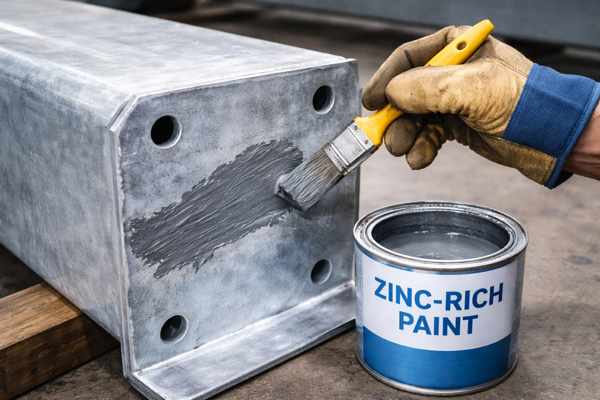
Hot-dip galvanized coatings provide excellent corrosion protection for structural steel and hardware. However, coatings may become damaged due to welding, cutting, transport, erection, or handling. ASTM A780 – Standard Practice for Repair of Damaged and Uncoated Areas of Hot-Dip Galvanized Coatings provides approved repair methods to restore corrosion protection.
This guide explains ASTM A780 repair procedures in practical terms for coating inspectors, QA/QC engineers, fabricators, and site supervisors.
1️⃣ Scope of ASTM A780
ASTM A780 covers repair of:
- Damaged galvanized coatings after fabrication
- Weld-burned areas
- Flame-cut edges
- Handling damage
- Uncoated areas after galvanizing
Repair extent and method must be agreed upon between contracting parties.
2️⃣ Approved Repair Methods (Three Options)
ASTM A780 allows three main repair methods:
🔹 1. Zinc-Based Alloy Repair (Solder Method)
Description:
Low-melting zinc alloy rods or powders are applied to the damaged area.
Process Summary:
- Clean surface (wire brush, light grinding, or blast cleaning)
- Remove weld flux and spatter
- Preheat surface to minimum 600°F (315°C)
- Do not exceed 750°F (400°C)
- Apply zinc alloy rod or powder
- Remove flux residue
- Measure thickness
Key Advantages:
- Metallurgical bond
- Good durability
- Suitable for shop repairs
🔹 2. Zinc-Rich Paint (Most Common Field Method)
These paints contain high levels of zinc dust (typically 65–92% in dry film).
Surface Preparation:
- Clean, dry, oil-free surface
- For immersion service → SSPC-SP10 (Near White Blast)
- For normal exposure → SSPC-SP11 (Power Tool Clean)
- Minimum acceptable → SSPC-SP2 (Hand Tool Clean)
Application:
- Spray or brush apply
- Follow manufacturer instructions
- Apply in single coat with multiple passes
- Verify dry film thickness (SSPC-PA2)
Advantages:
- Easy field application
- No heating required
- Most commonly used repair method
ASTM A123/A123M Hot-Dip Galvanizing Standard: Coating Thickness, Inspection & Acceptance
🔹 3. Sprayed Zinc (Metallizing)
Process:
- Blast clean to SSPC-SP5 (White Metal)
- Spray molten zinc using wire or powder
- Apply immediately after blasting
- Achieve agreed coating thickness
Advantages:
- Strong adhesion
- High-performance repair
- Ideal for large repair areas
3️⃣ Repair Coating Requirements
Repair material must:
✔ Provide minimum 2.0 mils (50 µm) thickness
✔ Offer barrier protection
✔ Preferably remain anodic to steel
✔ Be applicable in shop or field
Thickness must be verified using:
- Magnetic gauge
- Electromagnetic gauge
- Eddy-current gauge
4️⃣ Surface Preparation is Critical
For all repair methods:
- Remove oil and grease
- Remove weld flux residue
- Remove corrosion products
- Extend surface prep into surrounding galvanized coating
Improper surface preparation reduces repair durability.
5️⃣ Important Field Notes for Inspectors
- Repair area size must comply with the governing galvanizing specification (such as ASTM A123).
- Ensure minimum 2 mil thickness.
- Measure DFT after repair.
- Avoid overheating surrounding galvanized areas during solder repair.
- Follow SSPC standards where applicable.
ASTM A780 vs ASTM A123 (Quick Comparison)
| ASTM A780 | ASTM A123 |
|---|---|
| Repair method practice | Coating thickness specification |
| Covers damaged areas | Covers full galvanizing process |
| Zinc paint / solder / metallizing | Thickness acceptance criteria |
Practical Conclusion
ASTM A780 ensures that damaged galvanized coatings can be effectively restored using:
- Zinc alloy repair sticks
- Zinc-rich paint systems
- Thermal spray zinc
When performed correctly, these repairs maintain corrosion protection and structural integrity.