 By Admin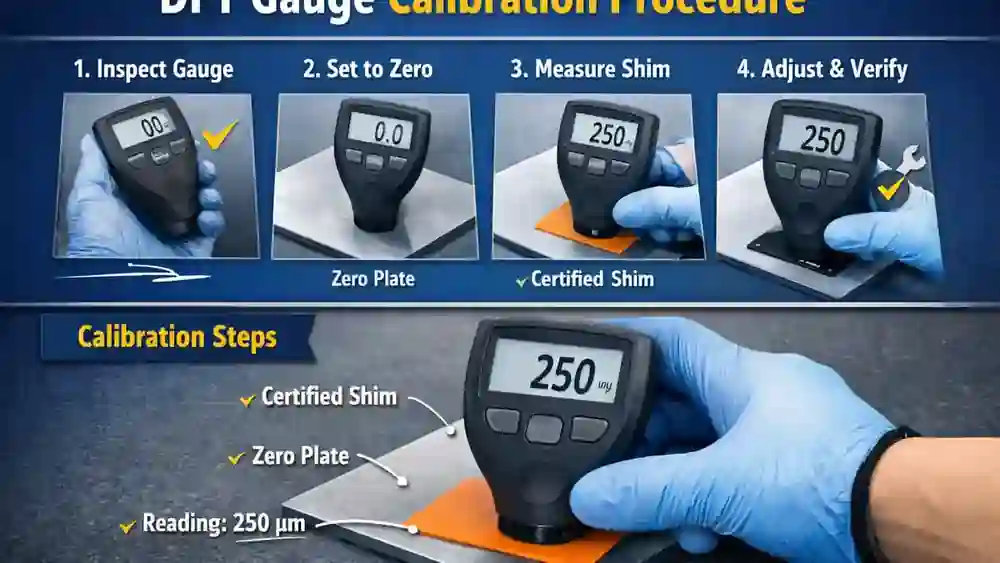
Accurate Dry Film Thickness (DFT) measurement is critical for coating quality control and long-term corrosion protection. An improperly calibrated DFT gauge can lead to false acceptance of under-thickness coatings or costly rejection of compliant work.
Calibration ensures that your coating thickness gauge provides reliable, repeatable, and specification-compliant readings. Proper calibration is required under standards such as SSPC-PA 2, ASTM D1186, and ASTM D1400.
This guide explains the complete calibration procedure with practical field tips for inspectors and QA/QC professionals.
What Is DFT Gauge Calibration?
DFT gauge calibration is the process of adjusting and verifying a thickness gauge against certified reference standards to ensure measurement accuracy.
It includes:
- Zero adjustment
- Shim verification
- Range calibration
- Repeatability confirmation
Calibration differs from verification. Calibration adjusts the gauge. Verification confirms accuracy without adjustment.
Types of DFT Gauges
Before calibration, identify your gauge type:
- Magnetic pull-off gauge
- Electronic magnetic induction gauge (for steel)
- Eddy current gauge (for non-ferrous substrates)
Each type follows similar principles but may have different adjustment procedures.
Tools Required for DFT Calibration
You will need:
- Certified plastic shims (traceable thickness standards)
- Zero plate (smooth, uncoated steel or aluminum plate)
- Clean lint-free cloth
- DFT gauge (calibrated and certified)
- Calibration record sheet
Always use shims close to the specified coating thickness range.
Standard Calibration Procedure (Explanation)
The standard procedure involves:
- Checking gauge condition
- Performing zero adjustment
- Verifying with certified shims
- Adjusting across measurement range
- Confirming repeatability
- Recording calibration details
Now let’s convert this into a structured How-To format.
How to Calibrate a DFT Gauge
🕒 Estimated Time
10–15 minutes
🧰 Tools Required
- Certified plastic shims
- Zero plate
- Clean lint-free cloth
- DFT gauge
- Calibration record sheet
Time needed: 15 minutes
Step-by-step procedure for calibrating a dry film thickness (DFT) gauge using certified shims and zero plates to ensure accurate and reliable coating thickness measurement.
- Inspect the Gauge
Check battery level and probe cleanliness. Inspect for damage and confirm the annual calibration certificate is valid.
- Perform Zero Adjustment
Place the probe on a clean, smooth zero plate.
Set the gauge reading to zero according to manufacturer instructions. - Place Certified Shim on Zero Plate
Select a shim within the expected measurement range and place it flat on the zero plate.
- Take Reading on Shim
Place the probe firmly on the shim.
The reading should match the certified shim thickness. - Adjust Gauge if Necessary
If readings differ from the shim value, adjust the gauge following manufacturer instructions.
- Perform Two-Point Calibration (Recommended)
Use a higher-value shim within the working range to confirm accuracy across the full measurement span.
- Verify Repeatability
Take at least three readings on the shim.
Values should be consistent within acceptable tolerance.
Step 8: Record Calibration Details
Document:
- Date
- Shim values used
- Gauge serial number
- Inspector name
- Project reference
Proper documentation ensures traceability and quality compliance.
Practical Field Tips for Accurate Calibration
✔ Always calibrate on a smooth, uncoated surface
✔ Use shim thickness near project specification
✔ Avoid calibrating on rough blast surfaces
✔ Calibrate at the start of each shift
✔ Recalibrate after battery replacement
✔ Allow gauge to stabilize in extreme temperatures
Common Calibration Mistakes
❌ Skipping zero adjustment
❌ Using damaged or worn shims
❌ Calibrating on coated or rough surfaces
❌ Not documenting calibration
❌ Ignoring probe contamination
These mistakes can lead to inaccurate inspection results and project disputes.
Why Calibration Is Critical in Industrial Projects
In Oil & Gas, marine, and power plant facilities:
- Under-thickness coating leads to corrosion
- Over-thickness coating may cause cracking
- Incorrect readings create quality disputes
Proper calibration ensures coating performance, compliance, and asset protection.
Frequently Asked Questions (FAQ)
Calibration adjusts the gauge to known standards. Verification confirms accuracy without making adjustments.
Calibration should be performed at the start of each shift, after battery replacement, after impact damage, or whenever accuracy is in doubt.
No. Calibration must be performed on a smooth, clean reference plate.
At least one shim within the measurement range is required. Two-point calibration is recommended for better accuracy.
Yes. Surface profile can influence thickness readings because gauges measure from peak height.
Yes. Most quality systems require annual laboratory certification traceable to national standards.
Conclusion
The calibration procedure for a DFT gauge is a simple but essential step in coating inspection. By performing proper zero adjustment, shim verification, and repeatability checks, inspectors ensure accurate and defensible coating thickness measurements.
Consistent calibration protects coating performance, reduces disputes, and ensures compliance with project specifications and industry standards.
Accurate measurement begins with proper calibration.