 Pritam Singh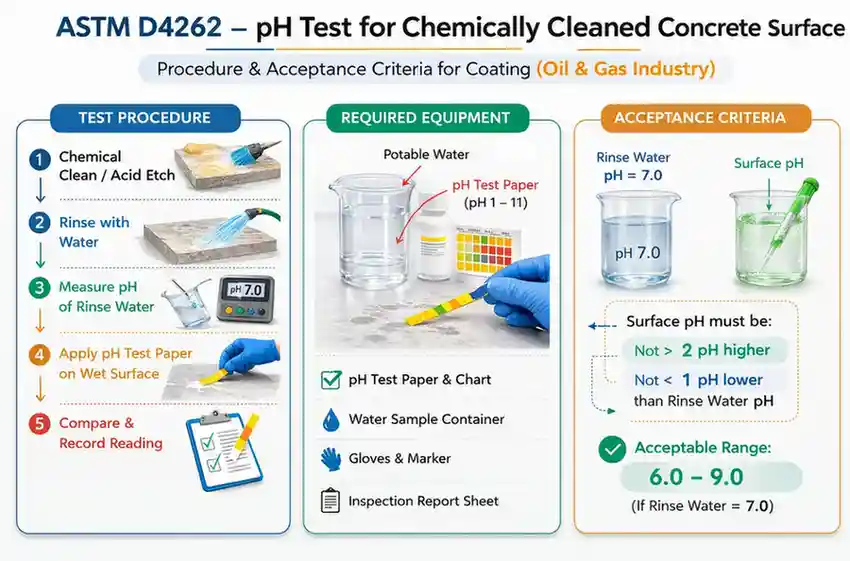
ASTM D4262 pH testing is an important method used to evaluate chemically cleaned or acid-etched concrete surfaces before applying protective coatings. Proper surface preparation is essential in industries such as oil and gas, power generation, and industrial construction where coating performance depends heavily on the condition of the concrete substrate.
During surface preparation, techniques such as chemical cleaning or acid etching are commonly used to remove contaminants and improve the concrete surface profile. However, these processes can leave behind acidic or alkaline residues that may negatively affect coating adhesion and long-term durability.
The ASTM D4262 pH test for concrete surfaces is widely used by coating inspectors to verify that these chemical residues have been properly removed after rinsing. By measuring the pH of the final surface, inspectors can confirm that the concrete is suitable for coating application and that the cleaning process was effective.
This article explains the ASTM D4262 pH testing procedure, including its purpose, required equipment, step-by-step test method, acceptance criteria, and its importance in industrial coating inspection and concrete surface preparation.
What is ASTM D4262?
ASTM D4262 is a standard test method used to determine the pH of chemically cleaned or etched concrete surfaces before the application of coatings or linings.
The test is designed to verify that any chemical agents used during surface preparation have been properly removed through rinsing. Residual chemicals left on the concrete surface can interfere with coating adhesion, causing coating failure.
The standard focuses on measuring the acidity or alkalinity of the concrete surface after the final rinse using pH test paper.
Importance of pH Testing in Concrete Surface Preparation
Proper surface preparation is critical for achieving long-lasting coating performance. If chemical cleaning or acid etching is used during preparation, the concrete surface must be thoroughly rinsed to remove any remaining chemicals.
If these chemicals remain on the surface, they may cause several problems, including:
- Coating adhesion failure
- Blistering or peeling of coatings
- Chemical reactions with coating materials
- Premature deterioration of protective systems
- Surface contamination that weakens bond strength
By conducting pH testing according to ASTM D4262, inspectors can confirm that the surface has been properly neutralized and rinsed.
This test is particularly important in industries such as:
- Oil and gas facilities
- Industrial plants
- Power generation facilities
- Chemical processing plants
- Water treatment plants
- Marine and offshore structures
In these environments, coatings must perform reliably under harsh conditions, making surface preparation verification essential.
Understanding the pH Scale
Before discussing the testing method, it is important to understand what pH represents.
The pH scale measures the hydrogen ion concentration in a solution, which determines whether the solution is acidic, neutral, or alkaline.
The scale ranges from 0 to 14:
| pH Range | Condition |
|---|---|
| 0 – 6 | Acidic |
| 7 | Neutral |
| 8 – 14 | Alkaline |
Concrete is naturally alkaline, typically having a pH between 10 and 13. However, after chemical cleaning or acid etching, the surface may temporarily become acidic until it is neutralized by rinsing.
Measuring the pH of the surface helps determine whether the cleaning chemicals have been effectively removed.
Applications of ASTM D4262 Testing
The ASTM D4262 test method is commonly used in projects involving:
Industrial Floor Coatings
Before applying epoxy or polyurethane coatings, the concrete surface must be clean and chemically neutral.
Protective Coatings in Oil and Gas Facilities
Concrete foundations, equipment bases, and containment areas require coatings that adhere properly to the substrate.
Power Plant Infrastructure
Concrete structures in power plants often receive protective coatings to resist chemicals and moisture.
Water and Wastewater Treatment Plants
Concrete tanks and structures require coatings to prevent corrosion and chemical attack.
Marine and Offshore Facilities
Concrete surfaces exposed to harsh environments must be properly prepared before coating application.
Equipment Required for ASTM D4262 Testing
One advantage of ASTM D4262 is that it requires minimal equipment, making it ideal for field inspections.
pH Test Paper
The primary tool used for this test is pH test paper, which changes color when exposed to water or moisture.
The pH test paper should have:
- A measurement range from pH 1 to pH 11
- Ability to measure increments of 0.5 pH units
- A color comparison chart provided by the manufacturer
This simple tool allows inspectors to quickly determine the pH of the surface in the field.
ASTM D4259: Mechanical Surface Preparation of Concrete Before Coating
Materials Required for Testing
The ASTM D4262 method uses two basic materials:
Potable Water
Clean water is used to rinse the chemically cleaned or etched concrete surface. The pH of this rinse water must also be measured to establish the baseline reference.
Wet Concrete Surface
Testing must be performed after the final rinse while the surface is still wet. This ensures that the pH reading reflects the condition of the surface immediately following the cleaning process.
Step-by-Step Procedure for ASTM D4262 Testing
The ASTM D4262 procedure is straightforward and can be completed quickly during inspection.
Step 1: Prepare the Test Paper
Tear a small strip of pH test paper from the roll.
Step 2: Wet the Test Paper
Moisten the test strip using the rinse water or moisture present on the concrete surface.
Step 3: Observe Color Development
Allow the test paper to develop its color after becoming wet.
Step 4: Compare with Color Chart
Compare the color of the test paper with the provided color chart to determine the pH value.
Measuring the pH of Rinse Water
Before evaluating the concrete surface, inspectors must measure the pH of the rinse water.
This step establishes the reference point used to determine whether the surface pH is acceptable.
The rinse water pH should be measured:
- At the beginning of the final rinse cycle
- At the end of the final rinse cycle
These readings provide a baseline for evaluating surface pH results.
Surface Sampling Requirements
To ensure reliable results, ASTM D4262 specifies the number of readings required.
For each 500 square feet of surface area, inspectors should take:
- At least two pH readings
- Measurements at randomly selected locations
Testing should be performed immediately after the final rinse and before the water has fully drained from the surface.
Acceptance Criteria According to ASTM D4262
After completing the pH measurements, the results must be compared with the pH of the rinse water.
According to the standard, the surface pH should:
- Not be more than 1.0 pH unit lower than the rinse water, and
- Not exceed 2.0 pH units higher than the rinse water
If the readings fall outside this range, the surface may still contain chemical residues.
In such cases, additional rinsing or cleaning may be required before coating application.
Importance of ASTM D4262 for Coating Adhesion
Coating adhesion depends heavily on the cleanliness and chemical condition of the concrete surface.
If chemical residues remain after cleaning, they may react with the coating material or interfere with bonding.
ASTM D4262 helps ensure that:
- Acid residues from etching have been neutralized
- Cleaning chemicals have been removed
- The surface is chemically stable
- Coatings can adhere properly
For coating inspectors, verifying surface pH is a critical quality control step before coating application.
Advantages of ASTM D4262 Testing
This test method offers several practical benefits:
Simple and Quick
The test requires minimal equipment and can be performed in a few minutes.
Low Cost
Only inexpensive pH test paper is required.
Field Friendly
The test can be conducted directly on the job site without laboratory equipment.
Reliable Quality Control
The method provides a quick confirmation that the concrete surface has been properly rinsed.
Limitations of the Test Method
Although ASTM D4262 is useful, it also has some limitations.
Surface Moisture Requirement
Testing must be done while the surface is still wet after rinsing.
Approximate Measurement
pH test paper provides an approximate reading rather than precise laboratory measurements.
Surface Condition Sensitivity
Contamination from external sources may influence readings.
Despite these limitations, the method remains widely used because of its simplicity and practicality.
Best Practices for Accurate Testing
To obtain reliable results when performing ASTM D4262 testing, inspectors should follow these best practices:
- Use fresh pH test paper from a sealed container
- Avoid touching the test strip with contaminated hands
- Perform the test immediately after rinsing
- Take multiple readings across the surface
- Record results carefully in inspection reports
Following these practices improves the accuracy and reliability of the testing process.
Role of Coating Inspectors in Surface pH Testing
Coating inspectors play an important role in ensuring that concrete surfaces are properly prepared before coating application.
Their responsibilities may include:
- Verifying surface preparation procedures
- Conducting pH testing according to ASTM standards
- Recording inspection results
- Confirming acceptance criteria are met
- Recommending corrective action if necessary
For professionals working in industries such as oil and gas, power generation, and industrial construction, ASTM D4262 testing is a routine part of surface preparation inspections.
Frequently Asked Questions (FAQ) About ASTM D4262 pH Testing
ASTM D4262 is a standard test method used to determine the pH of chemically cleaned or acid-etched concrete surfaces before applying coatings or protective linings. The test helps inspectors verify that cleaning chemicals have been properly removed and that the concrete surface is ready for coating application.
This method is widely used in industrial facilities, oil and gas plants, refineries, and power generation plants where concrete surfaces require protective coatings.
pH testing is important because chemical cleaning or acid etching may leave residues on the concrete surface. These residues can interfere with coating adhesion and lead to premature coating failure.
By measuring the pH of the rinsed concrete surface, inspectors can confirm that the cleaning chemicals have been fully removed and that the surface is chemically stable for coating application.
ASTM D4262 testing should be performed immediately after the final rinse of chemically cleaned or etched concrete surfaces.
The test must be conducted while the surface is still wet and before the rinse water has completely drained from the concrete surface.
This ensures that the pH reading accurately reflects the condition of the surface after cleaning.
ASTM D4262 recommends taking at least two pH readings for every 500 square feet of concrete surface.
The readings should be taken at randomly selected locations to ensure that the entire surface has been properly rinsed and neutralized.
In the oil and gas industry, concrete structures such as containment areas, tank foundations, and refinery floors are exposed to chemicals, hydrocarbons, and harsh environmental conditions.
Protective coatings are used to protect these surfaces, and proper surface preparation is critical for coating performance.
ASTM D4262 testing helps ensure that chemical cleaning residues are removed, allowing coatings to bond effectively with the concrete substrate.
Yes, ASTM D4262 is specifically designed as a field testing method. The procedure requires only simple tools such as pH test paper and does not require laboratory equipment.
This makes it ideal for coating inspectors, quality control engineers, and contractors working on construction or maintenance projects.
Conclusion
ASTM D4262 provides a practical method for determining the pH of chemically cleaned or etched concrete surfaces before coating application. By measuring the acidity or alkalinity of the surface after rinsing, inspectors can confirm that chemical residues have been removed.
This test helps prevent coating failures by ensuring that the concrete surface is properly neutralized and ready for coating.
Because the procedure is simple, inexpensive, and easy to perform in the field, ASTM D4262 remains an essential tool for coating inspectors, contractors, and quality control professionals involved in concrete surface preparation.
Ensuring proper surface pH ultimately improves coating adhesion, durability, and long-term performance, making it a key step in successful protective coating projects.