 By Admin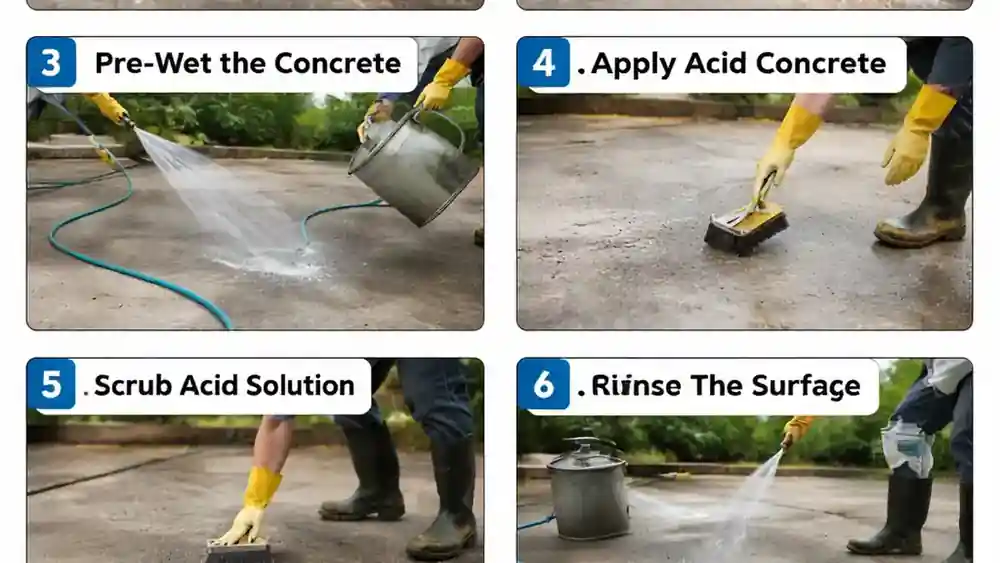
Introduction
Concrete surface preparation is essential for achieving proper coating adhesion and long-term performance. In some cases, mechanical abrasion may not be practical or economical. Acid etching provides an alternative method for altering the concrete surface profile before applying protective coatings.
ASTM D4260 outlines standardized procedures for chemically etching concrete to remove laitance, weak surface layers, and contaminants while creating a roughened texture suitable for coating application.
This method is commonly used for industrial floors, tank foundations, and other horizontal concrete surfaces where mechanical methods may not be feasible.
What Is ASTM D4260?
ASTM D4260 is a standard practice for acid etching concrete surfaces prior to coating application.
The purpose of acid etching is to:
✔ Remove weak surface laitance
✔ Eliminate curing compounds (where effective)
✔ Remove surface glaze
✔ Create a roughened surface texture
✔ Improve coating adhesion
It is intended to alter the surface profile chemically rather than mechanically.
When Should ASTM D4260 Be Used?
ASTM D4260 is typically used when:
- Preparing horizontal concrete surfaces
- Mechanical abrasion is not practical
- Moderate surface profiling is sufficient
- Light-to-medium duty coatings are applied
For heavy-duty systems or immersion service, mechanical profiling under ASTM D4259 may be more appropriate.
Relationship with Other Surface Preparation Standards
Acid etching is part of a broader concrete preparation system:
- ASTM D4258 – Surface cleaning
- ASTM D4259 – Mechanical profiling
- ASTM D4262 – pH testing after etching
- ASTM D4263 – Moisture testing
These standards work together to ensure proper coating adhesion.
Safety Considerations
Before acid etching:
- Concrete must be cured according to ACI 308
- Oil and grease must be removed
- Proper PPE must be used
- Disposal must comply with regulations
Hydrochloric acid must not be used where chlorides are restricted.
Acid Etching Procedure (Step-by-Step)
1️⃣ Pre-Surface Preparation
Before applying acid:
- Remove oil and grease (ASTM D4258)
- Remove fins and protrusions mechanically
- Ensure surface is free of standing water
- Some curing compounds may require mechanical removal
2️⃣ Suitable Surfaces
Acid etching is primarily suitable for:
- Horizontal slabs
- Concrete floors
It is less suitable for vertical or overhead surfaces.
3️⃣ Acid Solutions Used
Common acids include:
- Muriatic (hydrochloric) acid
- Sulfamic acid
- Phosphoric acid
- Citric acid
Concentration depends on surface condition and required roughness.
4️⃣ Application Method
- Pre-wet concrete surface
- Remove standing water
- Apply acid solution evenly
- Scrub with stiff bristle brush
- Observe bubbling reaction
Uniform bubbling indicates effective etching. Lack of bubbling may indicate contamination.
5️⃣ Rinsing and Neutralization
When bubbling subsides:
- Flush thoroughly with potable water
- Scrub to remove residues
- Repeat if necessary
Proper rinsing is critical to prevent coating failure.
6️⃣ Post-Etching Testing
Before coating:
- Test surface pH per ASTM D4262
- Test moisture content per ASTM D4263
- Verify uniform roughness
Time needed: 8 hours
Step-by-step method for acid etching concrete surfaces to achieve proper coating adhesion as per ASTM D4260.
- Clean the Concrete Surface
Remove oil, grease, dirt, and loose material from the concrete surface. Ensure the substrate is contamination-free before acid application.
- Remove Surface Irregularities
Mechanically remove fins and protrusions. Ensure the concrete surface is sound and stable.
- Pre-Wet the Surface
Lightly wet the concrete using clean water and remove standing water before applying the acid solution.
- Apply Acid Solution
Apply the selected acid solution evenly using a polyethylene sprinkling can. Uniform bubbling should be observed across the surface.
- Scrub the Surface
Scrub the acid-treated surface with a stiff bristle brush to ensure uniform etching and surface roughening.
- Rinse Thoroughly
Flush the surface completely with potable water to remove acid residues and reaction products.
- Test Surface pH
After drying, test the surface pH to ensure neutrality before applying coating.
- Verify Moisture Content
Confirm moisture content meets coating manufacturer requirements prior to coating application.
Appearance of Properly Etched Surface
A properly etched surface should:
✔ Be free of laitance
✔ Be free of oil and grease
✔ Have uniform texture
✔ Resemble medium-to-coarse sandpaper
✔ Possibly expose minor aggregate
Inspection Requirements
Inspection includes:
- Visual examination for contamination
- Verification of roughness
- pH testing
- Optional adhesion testing per ASTM D4541
When Acid Etching May Not Be Effective
Acid etching may not remove:
- Some curing compounds
- Heavy contamination
- Deep laitance
- Hardeners and sealers
In such cases, mechanical abrading (ASTM D4259) is recommended.
Practical Field Example
Warehouse floor preparation:
- Oil contamination removed
- Surface pre-wet
- Acid solution applied
- Surface scrubbed
- Thorough rinse performed
- pH tested
- Moisture tested
- Epoxy coating applied
This ensures proper adhesion.
Advantages of Acid Etching
✔ Cost-effective
✔ Simple application
✔ Minimal equipment required
✔ Suitable for large floor areas
Limitations of Acid Etching
❌ Not ideal for vertical surfaces
❌ May not remove certain curing compounds
❌ Requires careful neutralization
❌ Environmental and safety concerns
FAQ Section
Yes. It chemically roughens the surface by removing laitance and weak material.
Mechanical abrading is generally preferred for immersion or heavy-duty systems.
Residual acid can interfere with coating adhesion and cause failure.
No. It should not be used where chlorides are restricted.
Conclusion
ASTM D4260 provides a standardized method for chemically roughening concrete surfaces prior to coating application. When properly executed—including cleaning, etching, rinsing, and pH testing—acid etching can produce a contamination-free, textured surface suitable for many coating systems.
However, acid etching has limitations and may not replace mechanical abrading for high-performance or immersion service applications. Understanding when and how to use ASTM D4260 ensures proper surface preparation and long-term coating durability.
For industrial coating inspectors, selecting the correct surface preparation method is critical to achieving reliable adhesion and preventing premature coating failure.