 By Rimmy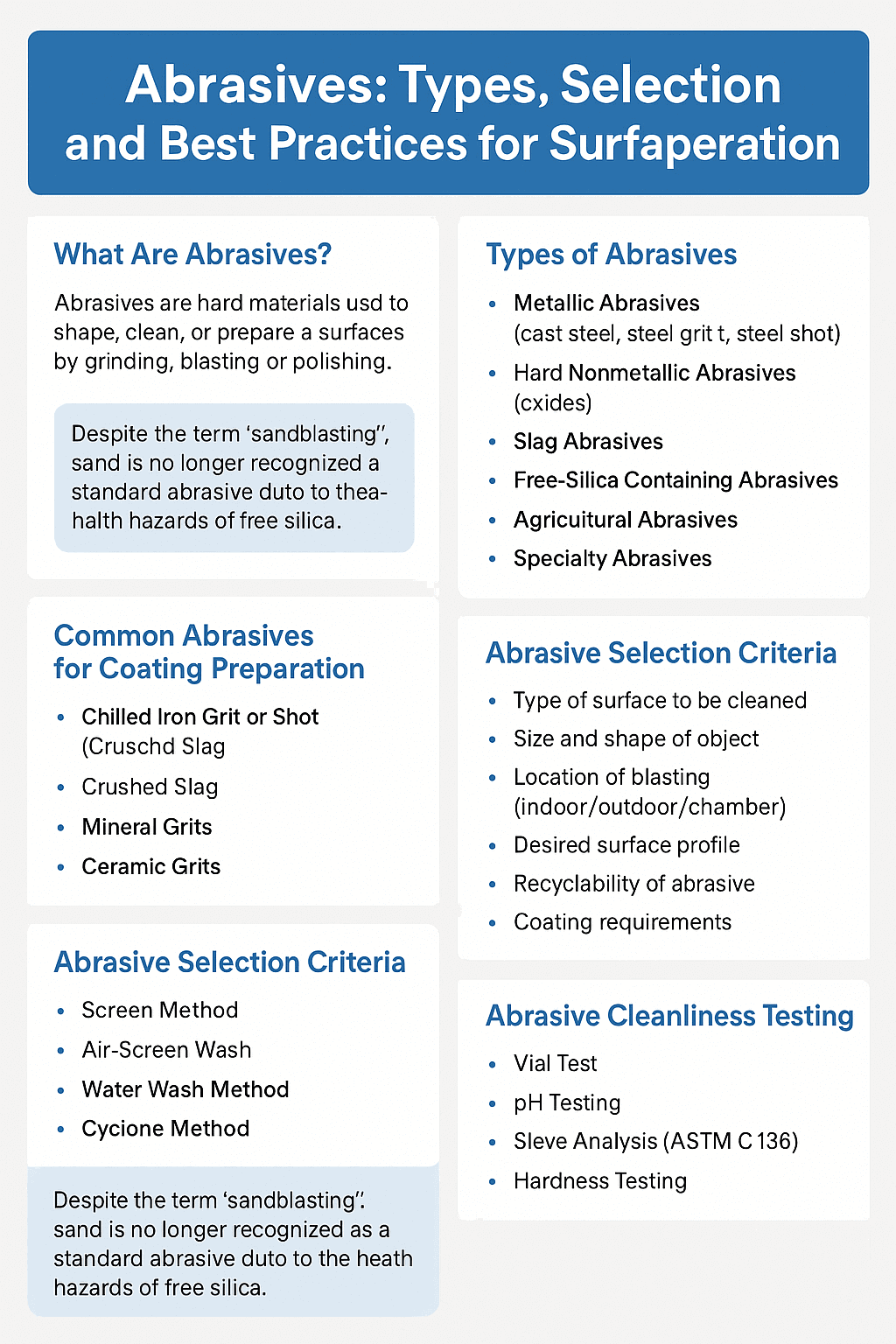
Abrasives are a critical component in surface preparation, metal finishing, and coating application processes across industries such as oil & gas, shipbuilding, construction, automotive, and heavy fabrication. The performance of a coating system or finishing operation depends significantly on the correct selection of abrasive media. Choosing the wrong abrasive can lead to inadequate surface profile, poor coating adhesion, excessive material loss, or increased operational costs.
Understanding the different types of abrasives, their properties, and proper selection criteria is essential for achieving consistent surface cleanliness and long-term coating performance. In addition to material type, factors such as hardness, shape, recyclability, environmental impact, and substrate compatibility must be considered. This article explores the main types of abrasives, how to select the appropriate media for various applications, and best practices to ensure effective and safe surface preparation.
What Are Abrasives?
Abrasives are hard materials used to shape, clean, or prepare a surface by grinding, blasting, or polishing. The choice of abrasive grit significantly affects the cleaning speed and the level of surface roughness achieved.
In blasting applications, a wide variety of abrasives are used—such as walnut shells, glass beads, slags, metallic shot, and grits. However, only a select few are suitable for surface preparation before painting or coating.
Common Abrasives for Coating Preparation
- Chilled Iron Grit or Shot
- Crushed Slag
- Mineral Grits
- Ceramic Grits
Note: Despite the term sandblasting, sand is no longer recognized as a standard abrasive due to the health hazards of free silica, which can cause silicosis.
Top 10 Industrial Floor Painting Contractors in the USA (2025 Edition)
Types of Abrasives
1. Metallic Abrasives
Examples include cast steel, steel grit, steel shot, cast iron, and malleable iron.
- Steel Grit & Shot: Effective for scale removal, surface cleaning, and preparation in recycling systems.
- Cast Iron: Extremely hard, used for tough deposits but not suitable in corrosive conditions.
- Applications: Best for heavy-duty cleaning, etching, and controlled surface profiles.
2. Hard Nonmetallic Abrasives (Oxides)
These include aluminum oxide, garnet, and silicon carbide.
- Garnet: Sharp and durable, suitable for blasting rooms.
- Aluminum Oxide: Long-lasting, precise cutting, but more expensive.
- Silicon Carbide: Very sharp and fast-cutting, often used in grinding.
3. Slag Abrasives
Derived from coal, copper, and nickel refining, slag abrasives are low-cost and efficient but tend to break down quickly, making them less recyclable.
4. Free-Silica Containing Abrasives
- Sand, Quartz, Flint/Chert
Although inexpensive and widely available, these abrasives pose severe health risks due to free silica dust and are banned in many regions.
5. Agricultural Abrasives
Eco-friendly alternatives such as crushed walnut shells are used for delicate machinery, aerospace, and stainless steel applications to avoid contamination.
6. Specialty Abrasives
- Dry Ice & Ice Blasting: Effective for removing organic coatings without altering the substrate.
- Plastic Beads: Used for aerospace coatings and delicate surfaces.
- Baking Soda & Sponge Media: Gentle cleaning with minimal surface alteration.
Abrasive Selection Criteria
When selecting an abrasive, consider:
- Type of surface to be cleaned
- Size and shape of the object
- Location of blasting (indoor/outdoor/chamber)
- Desired surface profile
- Recyclability of abrasive
- Coating requirements
Abrasive Recycling Methods
Recycling reduces cost and waste, especially for expensive abrasives. Common methods include:
- Screen Method: Separates usable abrasive from dust and debris.
- Air-Screen Wash: Uses airflow to separate particles by weight.
- Water Wash Method: Removes fines and dust, suitable for non-ferrous abrasives.
- Cyclone Method: Uses suction and airflow to separate fines from reusable material.
Abrasive Cleanliness Testing
Before use, abrasives should be tested to ensure cleanliness and suitability:
- Vial Test: Detects contamination, oil, or dust.
- pH Testing: Determines acidity or alkalinity.
- Sieve Analysis (ASTM C 136): Measures particle size distribution.
- Hardness Testing: Determines durability (Rockwell or Mohs scale).
Frequently Asked Questions (FAQ)
The main types of abrasives include aluminum oxide, silicon carbide, garnet, steel grit, steel shot, glass beads, and ceramic abrasives. These materials vary in hardness, shape, and recyclability, making them suitable for different blasting, grinding, and finishing applications.
Selecting the right abrasive depends on several factors, including the substrate material, required surface profile, coating specification, environmental regulations, and whether the abrasive will be recycled. Hard, angular abrasives create deeper anchor profiles, while softer or rounded media are better suited for cleaning or finishing applications.
Steel shot has a rounded shape and is typically used for peening and cleaning applications where a smoother surface is desired. Steel grit is angular and provides a more aggressive cutting action, making it suitable for heavy rust removal and creating a deeper surface profile.
Surface profile, also known as anchor pattern, improves coating adhesion by increasing the surface area for bonding. An incorrect profile—either too shallow or too deep—can lead to coating failure, reduced durability, or increased material consumption.
Yes, many abrasives such as steel grit, steel shot, and certain engineered media are designed for multiple reuse cycles. Proper recycling systems improve cost efficiency and reduce environmental impact. However, abrasive quality must be monitored to maintain consistent blasting performance.
Conclusion
Selecting the right abrasive is not simply a matter of availability or cost—it is a technical decision that directly affects surface quality, coating durability, and overall project efficiency. By understanding abrasive types, evaluating application requirements, and following industry best practices, professionals can achieve optimal surface profiles and reliable coating performance.
Modern surface preparation demands a balance between productivity, safety, and environmental responsibility. When abrasives are chosen and applied correctly, they enhance operational efficiency, reduce rework, and extend the service life of protective systems. A well-informed approach to abrasive selection ultimately leads to better surface integrity, improved asset protection, and long-term industrial reliability.
 Admin
Admin