 By admin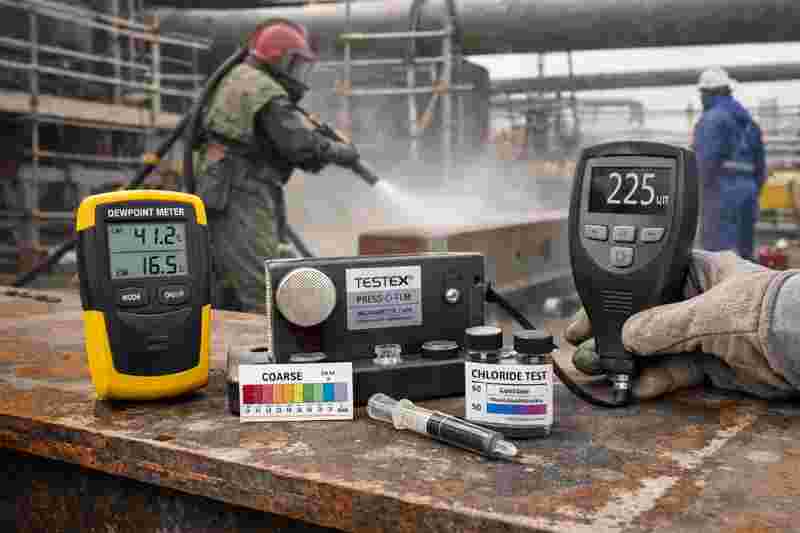
Protective coating is a critical quality control activity in oil & gas and industrial construction projects. Proper abrasive blasting and painting procedures ensure corrosion protection, extended asset life, and reduced maintenance costs.
For a complete understanding of inspection stages, you may also refer to our detailed guide on Coating Inspection & ITP Requirements .
1. Purpose
To define a structured industrial painting procedure for surface preparation, blasting, coating application, inspection, and safety control during site execution.
2. Scope of Work
This procedure applies to:
- Piping systems
- Structural steel
- Equipment
- Field weld joints
- Tie-in joints
- Galvanized surfaces
- Touch-up and repair coating works
3. Surface Preparation Standards
Surface preparation shall comply with internationally recognized standards:
- SSPC-SP1 – Solvent Cleaning
- SSPC-SP2 / SP3 – Hand & Power Tool Cleaning
- SSPC-SP6 – Commercial Blast Cleaning
- SSPC-SP10 (Sa 2½) – Near White Metal Blast
- SSPC-SP5 (Sa 3) – White Metal Blast
For reference to protective coating standards and industry best practices, visit the global authority organization:
👉 https://www.ampp.org – AMPP)
4. Pre-Blasting Requirements
Before abrasive blasting:
✔ Surface temperature must be minimum 3°C above dew point
✔ Remove oil, grease, and contaminants (SSPC-SP1)
✔ Check compressed air quality (Blotter test)
✔ Ensure minimum nozzle pressure 90 psi (620 kPa)
✔ Protect adjacent equipment
5. Abrasive Blasting Procedure
- Use approved garnet abrasive
- Maintain required surface cleanliness (Sa 2 / Sa 2½ as specified)
- Measure anchor profile using Testex tape
- Check residual dust (ISO 8502-3 level 2 or better)
- Conduct salt contamination test (Bresle method)
Chloride Limits:
- External coatings: ≤ 40 mg/m²
- Internal coatings: ≤ 20 mg/m²
If exceeded, wash with clean water and retest.
Blast-cleaned surfaces should be primed within 4 hours (or project specification requirement).
6. Painting Application Procedure
Painting shall not proceed when:
- Surface temp < 3°C above dew point
- Fog, rain, or high wind exists
- Surface contamination present
- Temperature outside manufacturer limits
Application Method
- Airless spray (primary method)
- Brush (small areas/touch-up only)
- Rollers only if specification permits
Mixing & Pot Life
- Power mix coating material
- Follow manufacturer thinning recommendations
- Use within specified pot life
7. Stripe Coating & Multi-Coat System
- Apply stripe coat to welds, bolts, edges
- Use contrasting colors between coats
- Follow overcoat interval per TDS
8. Dry Film Thickness (DFT) Control
DFT measurement shall comply with SSPC-PA2.
✔ Conduct wet film checks during application
✔ Measure DFT after curing
✔ Ensure total system thickness meets specification
If DFT is insufficient, apply additional coat.
If zinc primer exceeds limits or mud-cracks, reblast and reapply.
9. Repair & Touch-Up Procedure
For damaged coating:
- Clean and grind with 80-grit disc
- Feather edge 25–50 mm beyond defect
- Apply coating in square/rectangular shape
- Recheck DFT after curing
10. Quality Control & Inspection
Maintain the following records:
- Daily weather log
- Surface preparation report
- Salt contamination report
- Wet film thickness report
- DFT inspection report
- Final acceptance documentation
Inspection shall verify:
✔ Surface cleanliness
✔ Profile depth
✔ Chloride level
✔ Overcoat interval
✔ Final DFT
✔ Visual appearance
11. Safety Requirements
- Valid work permit
- PPE: coveralls, gloves, safety shoes
- Air-fed hood for blasting
- Deadman control for blasting nozzle
- Ground equipment properly
- Fire extinguisher nearby
- No solvent use for personal cleaning
- Follow MSDS guidelines